How to Sell Digital Products Online Successfully
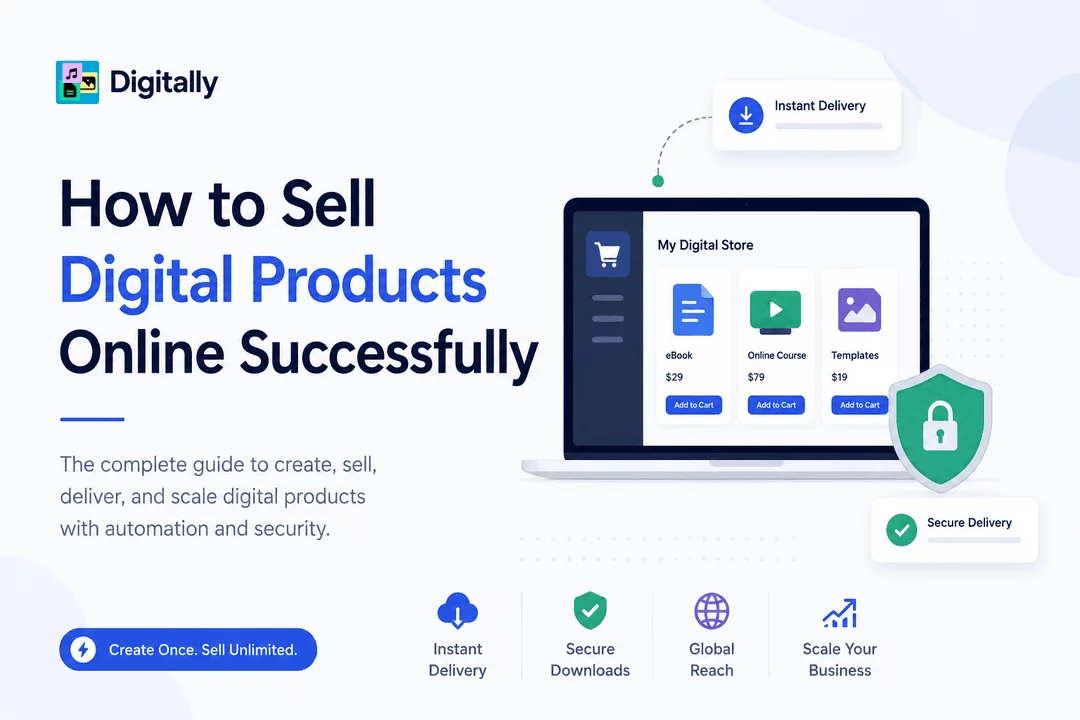
Selling digital products online is one of the most profitable and scalable ways to build an online business. Unlike physical products, digital goods require no inventory, shipping, or manufacturing after the initial creation. Once your product is ready, you can sell it repeatedly to customers around the world with minimal ongoing costs.
Whether you're selling eBooks, online courses, software, digital templates, music, stock photos, design assets, printable planners, or license keys, the right strategy and tools can help you create a reliable source of recurring revenue.
In this guide, you'll learn how to successfully sell digital products online, choose the right platform, automate delivery, protect your files, and increase your sales.
What Are Digital Products?
Digital products are downloadable or online-accessible items that customers receive electronically instead of physically.
Common examples include:
- eBooks
- PDF guides
- Online courses
- Software
- License keys
- Digital templates
- Graphic design assets
- Fonts
- Music and audio files
- Stock photography
- Printable planners
- Digital artwork
- Membership content
- Video tutorials
- Exclusive downloads
The biggest advantage is that you create the product once and can sell it unlimited times.
Why Sell Digital Products Online?
Digital products have become increasingly popular because they offer significant advantages over physical goods.
Low Startup Costs
You don't need inventory, packaging, or warehouse space.
High Profit Margins
After creating your product, each additional sale has very little cost.
Global Reach
Anyone with an internet connection can become your customer.
Instant Delivery
Customers receive their purchase immediately after payment.
Easy to Scale
Whether you sell ten downloads or ten thousand, delivery can be completely automated.
Step 1: Choose a Profitable Digital Product
Your success starts with solving a real problem.
Popular digital products include:
- Educational eBooks
- Video courses
- Business templates
- Canva templates
- Resume templates
- Shopify themes
- Website templates
- Photoshop presets
- Lightroom presets
- Excel spreadsheets
- Software applications
- SaaS tools
- Printable planners
- Digital journals
- Meal plans
- Fitness guides
- Coding resources
- AI prompts
- Music loops
- Sound effects
- Stock videos
Choose something you're knowledgeable about and that people are actively searching for.
Step 2: Validate Market Demand
Before spending weeks creating a product, verify that people actually want it.
Research using:
- Google Search
- Shopify stores
- Online communities
- Social media
- Customer surveys
- Keyword research tools
- Competitor analysis
Look for problems people repeatedly ask about.
Step 3: Create a High-Quality Product
Quality matters.
Customers expect digital products to be:
- Well designed
- Easy to use
- Updated regularly
- Professionally presented
- Mobile-friendly
- Valuable enough to justify the price
Invest time in creating something that exceeds expectations.
Step 4: Build Your Online Store
Having your own website gives you complete control over your business.
One of the best platforms is Shopify, thanks to its ease of use, reliability, payment options, and scalability.
Benefits include:
- Professional storefront
- Secure checkout
- Multiple payment gateways
- Global sales support
- Marketing integrations
- SEO-friendly structure
Step 5: Automate Digital Product Delivery
Manually emailing files after every purchase quickly becomes overwhelming.
Automation allows customers to receive their purchases instantly, improving satisfaction while saving you time.
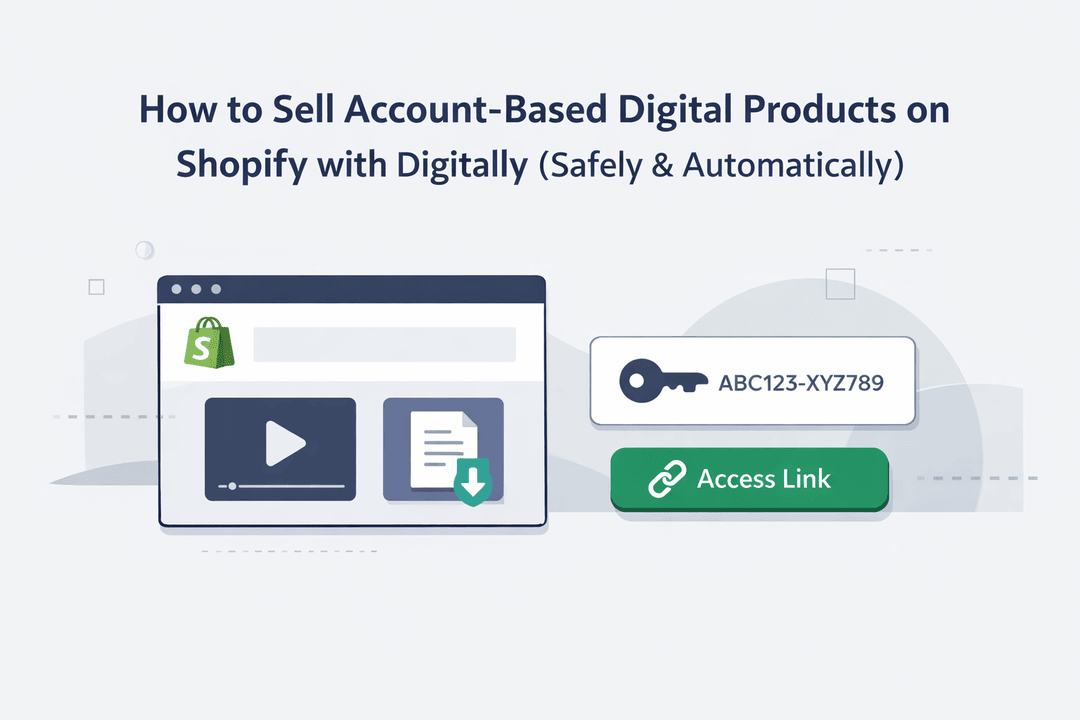
If you're using Shopify, Digitally – Digital Products helps automate delivery of:
- Downloadable files
- Software license keys
- Activation codes
- QR codes
- Custom download links
- Subscription access
Customers receive their purchases immediately after completing checkout without any manual work.
Step 6: Protect Your Digital Products
One of the biggest challenges of selling digital products is preventing unauthorised sharing.
Protect your content using features such as:
- Secure download links
- Download limits
- Expiring download URLs
- PDF stamping
- Unique licence keys
- Fraud prevention
- IP tracking
- Customer verification
Security helps reduce piracy while protecting your revenue.
Step 7: Optimise Your Product Pages
Your product page should clearly explain the value customers receive.
Include:
- Clear product title
- Professional images
- Feature list
- Benefits
- What's included
- Screenshots
- Preview videos
- FAQs
- Customer reviews
- Money-back policy
Focus on solving customer problems rather than simply listing features.
Step 8: Price Your Digital Products Correctly
Pricing depends on the value you provide.
Common pricing strategies include:
- One-time purchase
- Subscription
- Membership
- Tiered pricing
- Product bundles
- Limited-time discounts
Test different pricing models to find what converts best.
Step 9: Drive Traffic to Your Store
Even the best digital product won't sell without visitors.
Effective marketing channels include:
Search Engine Optimisation (SEO)
Publish helpful blog content targeting keywords your audience searches for.
Content Marketing
Create tutorials, guides, and educational resources that naturally promote your products.
Email Marketing
Build an email list and nurture subscribers with valuable content.
Social Media
Share product demonstrations, customer success stories, and educational tips.
Paid Advertising
Use Google Ads, Facebook Ads, Instagram Ads, Pinterest Ads, or TikTok Ads to reach targeted audiences.
Step 10: Increase Customer Trust
Trust directly impacts conversions.
Ways to build credibility include:
- Customer reviews
- Testimonials
- Secure checkout badges
- Transparent pricing
- Professional branding
- Detailed product information
- Fast customer support
- Refund policy
- Frequently Asked Questions
The more confidence customers have, the more likely they are to purchase.
Common Mistakes to Avoid
Many creators struggle because they make avoidable mistakes.
Avoid:
- Selling low-quality products
- Ignoring SEO
- Complicated checkout experiences
- Slow delivery
- No customer support
- Poor product descriptions
- Weak branding
- No email marketing
- Inconsistent pricing
- Failing to update products
Learning from these mistakes can significantly improve your long-term success.
Why Automation Matters
As your business grows, manual processes become increasingly difficult to manage.
Automating digital delivery helps you:
- Save time
- Deliver instantly
- Reduce customer support requests
- Eliminate manual errors
- Improve customer satisfaction
- Scale your business efficiently
With the right automation in place, you can focus on creating and marketing new products instead of fulfilling orders.
Final Thoughts
Selling digital products online offers one of the best opportunities to build a scalable business with low overhead and global reach. By choosing a valuable product, validating demand, creating a professional storefront, automating delivery, protecting your content, and consistently marketing your business, you can build a sustainable source of online income.
For Shopify merchants, combining a well-designed store with an automated digital delivery solution like Digitally – Digital Products makes it easy to provide a seamless customer experience. From secure file delivery and licence key distribution to custom download links and instant fulfilment, automation allows you to spend less time managing orders and more time growing your business.
Frequently Asked Questions
Yes. Shopify allows you to sell a wide range of digital products, including eBooks, software, templates, courses, music, and more. Using a digital delivery app automates fulfilment after purchase.
Popular options include online courses, software, templates, printables, digital art, stock media, eBooks, memberships, and licence keys.
Customers typically receive download links, licence keys, or access details instantly after completing their purchase via email, the thank-you page, or their customer account.
Use secure download links, download limits, expiring URLs, PDF stamping, unique licence keys, and fraud protection features to reduce unauthorised sharing.
Yes. Digital products generally have low ongoing costs, high profit margins, and excellent scalability because they can be sold repeatedly without managing physical inventory.
Sell Digital Products
Shopify Digital Products
Software Licence Keys
digitally
Secure File Delivery
Digital Downloads

Digitally ‑ Digital Products
Sell files, e-books, license keys, promo codes & digital links
 Install Now