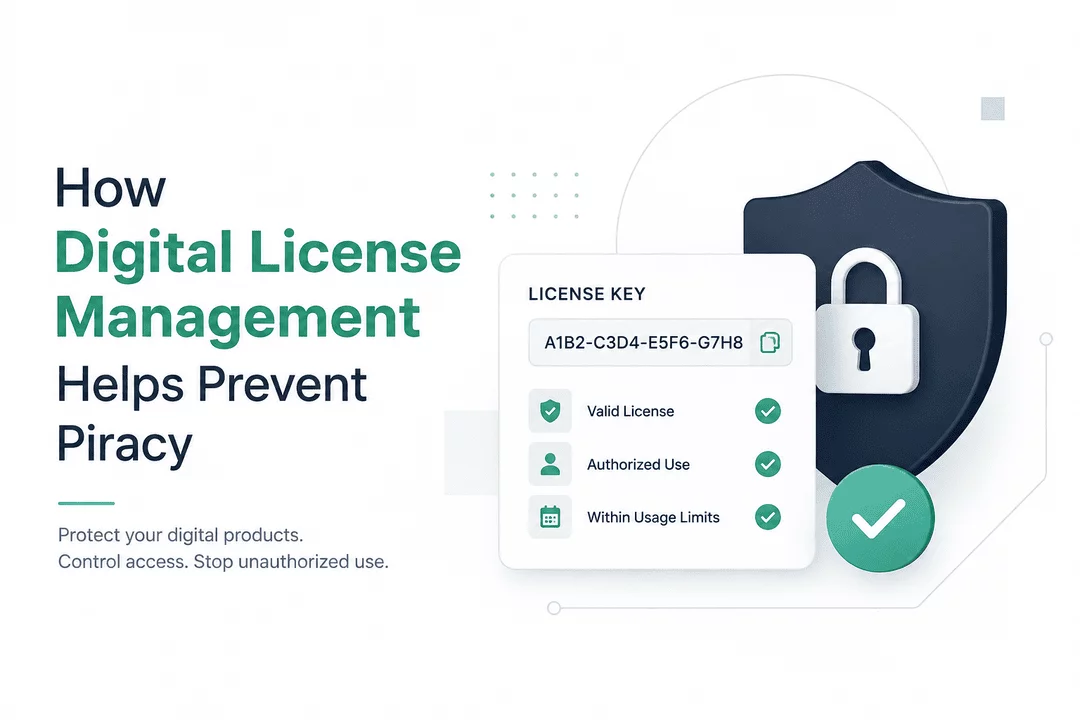
How Digital License Management Helps Prevent Piracy
Selling digital products online is convenient, scalable, and profitable—but it also comes with a major challenge: digital piracy.
Unlike physical products, digital files can be copied, shared, and redistributed almost instantly. An ebook, software key, design file, course resource, template, or downloadable guide can potentially be shared with hundreds of people after a single purchase.
This is where digital license management can make a significant difference.
Instead of simply delivering a file and hoping customers don't share it, license management gives merchants more control over how digital products are accessed and used. With the right system, businesses can issue unique license keys, limit unauthorized use, track deliveries, and protect their digital products.
In this guide, we'll explain how digital license management works, how it helps prevent piracy, and how Shopify merchants can use it to build a more secure digital product business.
What Is Digital License Management?
Digital license management is the process of creating, distributing, validating, and managing licenses for digital products.
A license can be used to give a customer permission to access or use a particular product. Depending on the business model, a license might be:
- A unique software activation key
- A product code
- A membership access code
- A subscription license
- A downloadable product license
- A unique URL or access token
For example, imagine you sell a software product for $49.
Instead of sending every customer the same activation code, you can generate a unique license key for each purchase:
Customer A: ABCD-1234-EFGH-5678
Customer B: JKLM-9012-NOPQ-3456
Customer C: RSTU-7890-VWXY-1234
Each key can then be associated with a specific order or customer.
If a key is shared or abused, you have more control over identifying and managing that license.
Why Digital Products Are Vulnerable to Piracy
Digital products are particularly vulnerable because they can be duplicated without physically reproducing anything.
Common piracy problems include:
1. File Sharing
Customers may share purchased PDFs, ebooks, templates, software, or other files with people who haven't paid.
2. License Key Sharing
A single software license may be shared between multiple users, reducing the number of legitimate purchases.
3. Unauthorized Downloads
Download links can sometimes be forwarded to people who didn't make the original purchase.
4. Reselling
Someone may purchase a digital product and redistribute or resell it without the creator's permission.
5. Excessive Account or Device Usage
For products that require activation, one license could potentially be used across an unreasonable number of devices or users.
No security system can guarantee that piracy will disappear completely. However, license management can make unauthorized sharing significantly harder and easier to control.
How License Management Helps Prevent Piracy
A good digital license system creates several layers of protection between your product and unauthorized users.
1. Give Every Customer a Unique License
One of the simplest ways to improve digital product security is to avoid using a single shared code.
With unique licenses, every customer receives an individual key.
This allows merchants to associate a license with:
- A specific order
- A customer
- A product
- A purchase date
- A subscription
- A usage limit
If a particular key is abused, you can identify the affected license without impacting every other customer.
2. Control License Activation
License activation allows you to determine when and where a license can be used.
For example, a software product could require customers to activate their license before using it.
You can potentially establish rules such as:
- One activation per license
- Limited device activations
- Activation expiration
- License renewal requirements
- Subscription-based access
These controls make it more difficult for a single purchase to become an unlimited shared product.
3. Validate Licenses Before Granting Access
License validation is another important layer of protection.
When a customer enters a license key, your system can check whether the key is:
- Valid
- Active
- Expired
- Already used
- Revoked
- Associated with the correct product
Only valid licenses should receive access to protected functionality or content.
This is especially useful for software, premium resources, memberships, and subscription products.
4. Revoke Abused Licenses
Sometimes a legitimate license becomes compromised.
For example, a customer might publicly post their software key or share it with dozens of people.
Instead of shutting down the entire product, license management lets you handle the individual license.
A merchant can potentially:
Detect → Investigate → Revoke → Replace
This creates a more manageable approach to piracy.
5. Limit Downloads and Access
License management works even better when combined with download protection.
For downloadable products, merchants can limit:
- Number of downloads
- Link lifetime
- Access duration
- Customer access
- Product availability
For example, instead of providing a permanent public download URL, a merchant can provide a controlled link that expires after a defined period.
This reduces the usefulness of shared download links.
License Keys vs. Simple Download Links
A simple download system typically works like this:
Purchase → Download Link → File
While this is convenient, the link may be forwarded to someone else.
A license-based system adds another layer:
Purchase → Unique License → Validation → Authorized Access
The license becomes a controllable identifier.
This doesn't mean download links are unnecessary. Instead, download protection and license management can work together.
For example:
Customer purchases a software product → receives a unique license key → downloads the software → enters the key → system validates the license → software becomes activated.
This creates a stronger security model than simply emailing the file.
Using License Management for Different Digital Products
License management isn't limited to software.
Software
Software businesses can use unique keys to control product activation and subscriptions.
Ebooks
Publishers can combine protected downloads with customer-specific access controls to reduce unauthorized sharing.
Templates and Design Assets
Creators selling premium templates, graphics, fonts, or design resources can associate purchases with specific customers and orders.
Memberships
Membership businesses can use license or access codes to control entry to premium content.
Digital Courses
Course creators can use controlled access and unique credentials to make unauthorized sharing more difficult.
Subscription Products
Recurring subscriptions can be linked to active licenses so access can change when a subscription expires or is canceled.
Combining License Management With Other Security Features
License management is strongest when it is part of a broader digital product security strategy.
Consider combining it with:
Download Limits
Restrict the number of times a customer can download a product.
Expiring Links
Automatically invalidate download links after a specific period.
PDF Protection
Add customer-specific information or other protections to downloadable PDF files.
IP Monitoring
Monitor unusual download or access activity that may indicate abuse.
Customer Verification
Associate licenses and downloads with the customer's order or account.
Access Expiration
Automatically remove access when a license or subscription expires.
Together, these controls can create multiple barriers against unauthorized distribution.
How Digitally Helps With License Management
For Shopify merchants selling digital products, Digitally – Digital Products can help automate digital fulfillment while providing tools for managing license-based products.
Merchants can use license key functionality to upload and manage unique keys and deliver them to customers after purchase.
This is useful for businesses selling:
- Software licenses
- Activation codes
- Product keys
- Subscription keys
- Premium digital resources
- Other code-based digital products
Instead of manually sending a license key after every order, the delivery process can be automated.
Digitally also supports features such as download limits, expiring links, PDF protection, and IP fraud protection, allowing merchants to build multiple layers of protection around their digital products.
For businesses with large license inventories, bulk license management can also reduce the manual work involved in organizing and delivering unique keys.
Best Practices for Preventing Digital Piracy
License management works best when combined with good security practices.
Use Unique Keys
Never rely on one universal activation key when individual licenses are possible.
Keep License Records Organized
Track which key belongs to which product and order.
Set Reasonable Usage Limits
Avoid allowing unlimited activations or downloads when your business model doesn't require them.
Monitor Unusual Activity
Multiple activations or downloads from unexpected locations may indicate license sharing.
Protect Download Links
Avoid permanent, publicly accessible links whenever possible.
Make Access Revocable
Your system should give you a way to disable compromised licenses.
Don't Make Security Too Difficult
Security should protect your business without creating unnecessary friction for legitimate customers.
A complicated checkout or activation process can hurt conversions, so aim for a balance between security and customer experience.
Final Thoughts
Digital piracy can become a serious problem as your digital product business grows.
The goal isn't simply to make your products difficult to access. It's to make sure that paying customers can access what they purchased while unauthorized users have fewer opportunities to exploit your products.
Digital license management provides an important foundation for achieving that balance.
By combining unique license keys, validation, controlled access, download limits, expiring links, and monitoring, Shopify merchants can create a more secure digital fulfillment system.
For Shopify stores selling software, ebooks, courses, templates, license keys, and other downloadable products, Digitally can help automate fulfillment while giving merchants more control over how their digital products are delivered and protected.
Frequently Asked Questions
Digital license management is the process of creating, distributing, validating, and controlling licenses for digital products. It helps merchants manage who can access or use their products.
It helps prevent piracy by using unique license keys, access controls, activation limits, download restrictions, and license validation to make unauthorized sharing more difficult.
Yes. License keys can be used for ebooks, templates, courses, memberships, subscriptions, digital resources, activation codes, and other products that require controlled access.
No. It cannot eliminate piracy completely, but it can reduce unauthorized sharing, identify abuse, and give merchants greater control over their digital products.
Digitally – Digital Products helps Shopify merchants manage and deliver unique license keys automatically. It can also be combined with download limits, expiring links, PDF protection, and other security features.
Yes. Digitally provides tools such as download limits, expiring links, PDF protection, and IP fraud protection that can add multiple layers of security to digital product delivery.
Digital License Management
Digital Product Security
Digital Products
Digitally
Digital Product Delivery
Shopify Digital Products

Digitally ‑ Digital Products
Sell files, e-books, license keys, promo codes & digital links
 Install Now