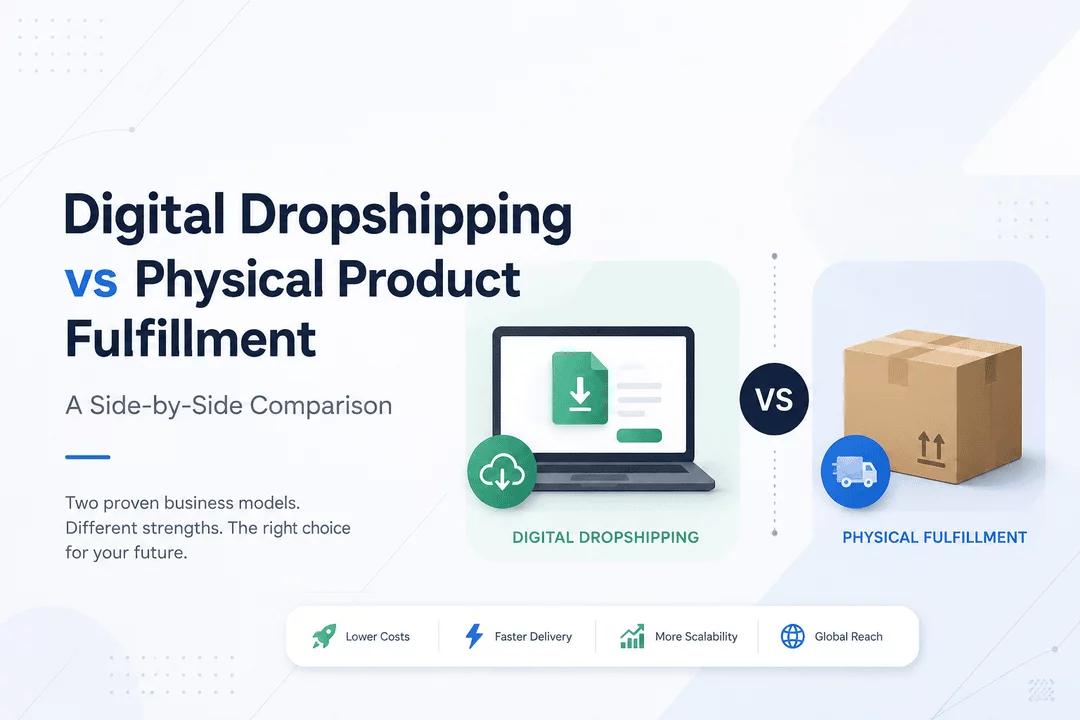
Digital Dropshipping vs Physical Product Fulfillment: A Side-by-Side Comparison
The ecommerce industry offers more opportunities than ever before. While traditional physical product businesses continue to thrive, digital products have become one of the fastest-growing segments of online commerce. Entrepreneurs can now sell ebooks, software licenses, online courses, templates, music, digital art, memberships, and activation keys without ever handling physical inventory.
Many merchants compare digital dropshipping with physical product fulfillment because both business models eliminate the need to manufacture products yourself. However, the way these businesses operate is dramatically different.
Understanding these differences can help you choose the right business model—or even combine both—to maximize profits and reduce operational complexity.
In this guide, we'll compare digital dropshipping and physical product fulfillment across every major category, including startup costs, delivery, automation, customer experience, scalability, and profitability.
What Is Digital Dropshipping?
Digital dropshipping refers to selling digital products that are automatically delivered after purchase. Unlike traditional dropshipping, there are no warehouses, shipping labels, or physical inventory.
Examples include:
- Software license keys
- Video courses
- Ebooks
- Printable planners
- Music files
- Design templates
- Digital artwork
- Premium memberships
- Activation codes
- Downloadable guides
Customers receive their purchase instantly through automated download links, license keys, or secure customer portals.
Side-by-Side Comparison
Feature | Digital Dropshipping | Physical Product Fulfillment |
Inventory | Digital files | Physical stock |
Shipping | None | Required |
Delivery Time | Instant | Several days |
Storage Costs | Very low | Warehouse expenses |
Shipping Costs | None | Ongoing |
Returns | Rare | Common |
Automation | Extremely high | Moderate |
Profit Margins | High | Moderate |
Global Sales | Instant | Shipping restrictions |
Scalability | Excellent | Limited by logistics |
Startup Costs
One of the biggest differences is the initial investment.
Digital Products
You typically only need:
- A Shopify store
- Digital products
- Delivery automation software
There are no shipping supplies or inventory purchases.
Typical expenses include:
- Shopify subscription
- Digital product app
- Marketing
- Product creation
Physical Products
Physical businesses usually require:
- Inventory purchases
- Packaging
- Shipping supplies
- Storage
- Warehousing
- Fulfillment fees
The startup investment is considerably higher.
Inventory Management
Digital inventory never runs out.
You can sell the same ebook, template, or software license thousands of times without manufacturing another copy.
Physical inventory, however, requires:
- Stock monitoring
- Supplier coordination
- Warehouse management
- Restocking
- Inventory forecasting
Inventory mistakes can delay deliveries and reduce customer satisfaction.
Delivery Speed
Customers increasingly expect immediate fulfillment.
Digital Delivery
Customers receive products:
- Immediately after payment
- Through email
- On the Shopify Thank You page
- Inside their customer account
The entire process often takes less than a minute.
Physical Delivery
Physical orders depend on:
- Warehouse processing
- Carrier pickup
- Customs (international)
- Local delivery
Shipping usually takes several days.
Shipping Costs
Shipping is one of the largest operational expenses for physical stores.
Costs include:
- Packaging
- Labels
- Courier charges
- International duties
- Insurance
Digital products eliminate all shipping expenses.
Profit Margins
Digital products generally offer significantly higher margins.
Once created, a digital product can be sold repeatedly without additional production costs.
Examples include:
- Online courses
- Design templates
- Software licenses
- Memberships
- Printables
Physical products require ongoing manufacturing or wholesale purchasing.
Automation Potential
Automation is where digital fulfillment truly excels.
Digital fulfillment can automate:
- File delivery
- License key assignment
- Download emails
- Customer notifications
- Purchase confirmation
- Access permissions
- Download limits
- Expiring download links
Physical fulfillment still depends on suppliers, warehouses, shipping providers, and inventory systems.
Customer Experience
Modern customers value convenience.
Digital Products
Customers appreciate:
- Instant access
- No shipping delays
- Immediate downloads
- Easy account access
- Automatic emails
Physical Products
Customers may experience:
- Shipping delays
- Lost packages
- Damaged goods
- Customs issues
- Return requests
Returns and Refunds
Physical stores often deal with:
- Return shipping
- Damaged products
- Replacement orders
- Warehouse inspections
Digital products rarely require physical returns, although refund policies still vary depending on the type of content sold.
Global Selling
Digital businesses can reach customers worldwide instantly.
There are no concerns about:
- Shipping zones
- Customs paperwork
- Delivery restrictions
- International postage
A customer in another country receives the same product just as quickly as a local buyer.
Scalability
Imagine receiving 10,000 orders in one day.
Physical Store
You'll need:
- More inventory
- More warehouse space
- More staff
- Faster shipping operations
Digital Store
Automation handles nearly everything.
As long as your store infrastructure is in place, delivering additional digital orders requires little extra effort.
Security Considerations
Digital products should still be protected from unauthorized sharing.
Best practices include:
- Download limits
- Expiring links
- PDF stamping
- Secure customer accounts
- License key management
- Fraud prevention
Using a dedicated Shopify app helps secure digital assets while maintaining a seamless customer experience.
Why Shopify Merchants Choose Digitally
If you're selling digital products on Shopify, automation is essential for delivering a great customer experience.
Digitally helps merchants streamline digital fulfillment by offering:
- Instant file delivery after purchase
- Secure download links
- License key and activation code delivery
- Custom download links
- QR code delivery
- Download limits and expiring links
- PDF stamping for added content protection
- Customer download portal
- Bulk product management
- Automated email delivery
Whether you're selling ebooks, software licenses, online courses, templates, memberships, or digital downloads, Digitally helps eliminate manual work while providing secure and reliable delivery.
Which Business Model Is Right for You?
The best choice depends on your goals.
Choose digital fulfillment if you want:
- Higher profit margins
- Instant customer delivery
- Low startup costs
- No shipping logistics
- Global reach
- Highly automated operations
Choose physical fulfillment if your products require tangible goods or customers expect physical items.
Many successful Shopify merchants even combine both approaches by selling physical products alongside digital bonuses such as guides, courses, warranties, or exclusive downloads.
Final Thoughts
Both digital dropshipping and physical product fulfillment have their place in ecommerce, but they differ significantly in cost, complexity, and scalability.
Digital fulfillment offers faster delivery, lower operating costs, and greater automation, making it an attractive option for entrepreneurs selling downloadable content, software, memberships, or activation keys. Physical fulfillment remains essential for tangible goods but comes with additional logistics and operational overhead.
If your goal is to build a scalable Shopify business with minimal manual work, investing in automated digital product delivery can help you provide a better customer experience while saving time and reducing support requests.
Frequently Asked Questions
Digital dropshipping delivers downloadable products such as ebooks, software, and online courses instantly after purchase, while physical fulfillment involves shipping tangible products through warehouses and delivery carriers.
Yes. Shopify merchants can automate digital product delivery using apps like Digitally, which instantly sends files, license keys, and download links after a successful purchase.
Digital products typically offer higher profit margins because there are no manufacturing, shipping, or warehousing costs after the product is created.
Yes. Digital products are usually delivered within seconds or minutes, whereas physical products can take days or weeks to reach customers.
Yes. Digitally supports secure file delivery, license key distribution, activation codes, custom download links, QR codes, download limits, and automated email delivery for Shopify stores.
Absolutely. Many merchants combine physical products with digital downloads, user guides, memberships, bonus content, software licenses, or printable resources to increase customer value and generate additional revenue.
Digital Dropshipping vs Physical Product Fulfillment
Digital product fulfillment
Shopify digital products
digitally
Sell digital products online
Instant digital delivery
Digital fulfillment software

Digitally ‑ Digital Products
Sell files, e-books, license keys, promo codes & digital links
 Install Now