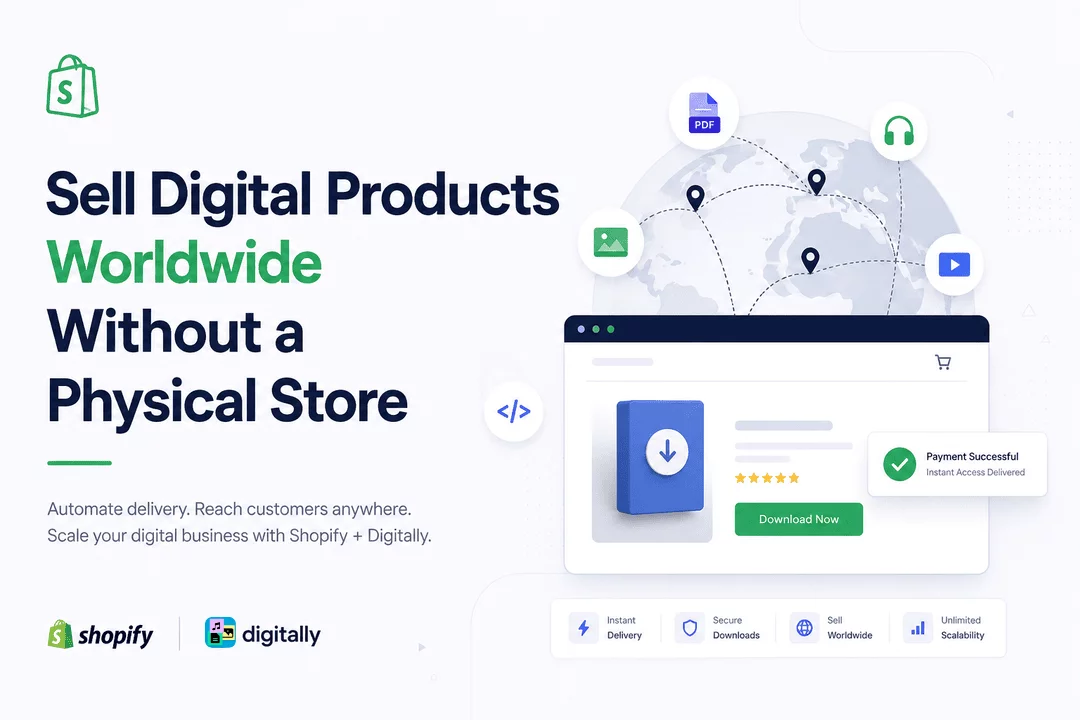
Sell Digital Products Worldwide Without a Physical Store
The internet has completely transformed the way people build businesses. Years ago, selling products internationally required warehouses, shipping teams, retail locations, inventory management, and significant upfront investment. Today, creators, entrepreneurs, educators, developers, and designers can launch profitable businesses online without owning a physical store.
Digital products have become one of the fastest-growing ecommerce categories because they are scalable, easy to distribute, and highly profitable. Whether you sell ebooks, software, templates, music, courses, digital art, licenses, printables, or memberships, you can reach customers worldwide instantly.
With Shopify and digital delivery solutions like Digitally, merchants can automate the entire process — from payment collection to secure file delivery — without dealing with physical inventory or shipping logistics.
In this guide, we’ll explore how to sell digital products worldwide, why digital commerce is booming, and how businesses can create a fully automated online store using Shopify.
Why Digital Products Are the Future of Ecommerce
Traditional ecommerce businesses face many challenges:
- Inventory management
- Shipping costs
- Warehousing expenses
- International delivery delays
- Product returns
- Manufacturing costs
- Supply chain disruptions
Digital products eliminate nearly all of these problems.
When you sell digital goods, customers receive instant access after purchase. There’s no packaging, no shipping delays, and no inventory limitations. One product can be sold an unlimited number of times without additional production costs.
This makes digital commerce one of the most scalable online business models available today.
Popular digital products include:
- Ebooks
- Software applications
- License keys
- Online courses
- Design templates
- Music files
- Video content
- Printable planners
- Photography presets
- Fonts and graphics
- Digital memberships
- AI prompts
- Website themes
- Educational resources
Because delivery is instant, businesses can serve customers across different countries and time zones 24/7.
The Global Opportunity for Digital Sellers
The digital economy continues to expand every year. Consumers are becoming increasingly comfortable purchasing downloadable products online because they want instant access, convenience, and flexible learning or entertainment options.
Creators no longer need physical storefronts to compete globally.
A solo developer in Pakistan can sell software to customers in the United States. A designer in Europe can sell templates to businesses in Asia. An educator can deliver online courses to students worldwide.
Digital commerce removes geographical barriers.
With the right Shopify setup, even small businesses can operate like global brands.
Why Shopify Is Ideal for Selling Digital Products
Shopify is widely known for ecommerce, but it’s also an excellent platform for selling digital goods.
It provides:
- Secure checkout systems
- Multiple payment gateways
- Mobile-friendly storefronts
- Global selling capabilities
- Automated order processing
- Marketing integrations
- SEO-friendly architecture
- App integrations for digital delivery
Unlike complex custom ecommerce systems, Shopify allows merchants to launch quickly without advanced technical knowledge.
This makes it ideal for:
- Independent creators
- Startup founders
- SaaS businesses
- Coaches and educators
- Developers
- Agencies
- Freelancers
- Digital entrepreneurs
However, Shopify alone doesn’t fully automate digital product delivery. That’s where dedicated digital delivery apps become essential.
How Digitally Simplifies Digital Product Sales
Digitally helps Shopify merchants automate the delivery of digital products after purchase.
Instead of manually emailing files or license keys to customers, merchants can create a fully automated workflow.
This improves:
- Customer experience
- Delivery speed
- Store efficiency
- Security
- Scalability
With automated delivery, customers receive their products instantly after checkout.
This is especially important because modern buyers expect immediate access.
Digitally can help merchants deliver:
- Downloadable files
- License keys
- Software activation codes
- PDFs and ebooks
- Premium content
- Digital assets
- Course materials
- Creative resources
Automation also reduces support requests and manual work.
Benefits of Selling Digital Products Without a Physical Store
1. Low Startup Costs
Traditional retail businesses require inventory, storage, packaging, and shipping.
Digital businesses can start with minimal investment.
In many cases, creators only need:
- A Shopify store
- A digital product
- A delivery system like Digitally
- Basic marketing
This lowers the barrier to entry for entrepreneurs.
2. Unlimited Scalability
Physical products require restocking.
Digital products do not.
You can sell the same ebook, course, or software license thousands of times without increasing production costs.
This creates strong profit margins and scalable revenue.
3. Global Reach
Digital products can be delivered instantly to customers anywhere in the world.
There are no international shipping delays, customs fees, or logistics problems.
Your store remains open 24/7 for global customers.
4. Instant Delivery
Modern consumers value speed.
Automated digital delivery allows customers to access products immediately after payment.
This improves customer satisfaction and builds trust.
5. No Inventory Management
Managing inventory can be stressful and expensive.
Digital products eliminate:
- Overstock problems
- Inventory shortages
- Warehouse costs
- Packaging expenses
This simplifies business operations significantly.
6. Higher Profit Margins
Because there are no manufacturing or shipping costs, digital products often produce higher margins compared to physical products.
After creating the product once, additional sales generate revenue with minimal additional expense.
Best Types of Digital Products to Sell
If you’re starting a digital business, here are some profitable product categories:
Ebooks
Educational guides, tutorials, business resources, and niche knowledge products perform well online.
Online Courses
People continuously invest in learning new skills.
Course creators can sell:
- Business education
- Design training
- Coding lessons
- Marketing strategies
- AI tutorials
- Language learning
Software and License Keys
Developers can sell:
- SaaS tools
- Desktop applications
- Plugins
- Themes
- Scripts
- Activation licenses
Templates and Design Assets
Creative professionals often purchase:
- Canva templates
- Resume templates
- UI kits
- Social media packs
- Presentation templates
Music and Audio Files
Musicians and creators can sell:
- Beats
- Sound effects
- Audio packs
- Royalty-free music
Membership Content
Subscription-based businesses can provide recurring premium content to customers.
How to Start Selling Digital Products on Shopify
Step 1: Choose Your Niche
Focus on solving a specific problem.
Examples include:
- Productivity resources
- Educational materials
- Business templates
- Creative assets
- Developer tools
- Marketing guides
A focused niche helps attract the right audience.
Step 2: Create High-Quality Products
Successful digital businesses prioritize quality.
Your products should:
- Solve real problems
- Deliver clear value
- Look professional
- Be easy to access
- Provide a smooth user experience
High-quality products generate repeat customers and referrals.
Step 3: Build Your Shopify Store
Your storefront should include:
- Clear branding
- Product descriptions
- High-quality visuals
- Simple navigation
- Mobile optimization
- Trust-building content
Professional presentation increases conversion rates.
Step 4: Automate Delivery with Digitally
Automation is critical for scaling.
With Digitally, merchants can streamline digital delivery and reduce manual work.
Customers receive instant access to purchased products automatically.
This creates a smoother buying experience.
Step 5: Market Your Products
Digital businesses grow through visibility.
Popular marketing strategies include:
- SEO blogging
- Email marketing
- YouTube tutorials
- TikTok content
- Instagram marketing
- Pinterest traffic
- Affiliate partnerships
- Paid advertising
- Community building
Consistent marketing builds long-term growth.
SEO Tips for Selling Digital Products Worldwide
Search engine optimization can drive long-term traffic to your store.
Here are important SEO strategies:
Use Targeted Keywords
Focus on keywords your audience searches for.
Examples:
- Sell digital products online
- Shopify digital downloads
- Sell ebooks online
- Software license delivery
- Instant digital downloads
Create Educational Blog Content
Blogging helps attract organic traffic.
Write guides about:
- Ecommerce growth
- Digital business strategies
- Creator economy trends
- Software selling tips
- Online marketing
Helpful content builds authority.
Optimize Product Pages
Strong product pages should include:
- Keyword-rich titles
- Clear benefits
- FAQs
- Customer trust signals
- Visual previews
Improve Site Speed
Fast-loading stores improve both SEO and conversions.
Common Challenges in Digital Product Selling
While digital commerce is powerful, merchants still face challenges.
Product Piracy
Digital files can sometimes be shared illegally.
Merchants should use secure delivery systems and protected download methods.
Competition
The digital marketplace is competitive.
Success often comes from:
- Better branding
- Higher quality
- Stronger marketing
- Better customer support
- Unique positioning
Building Trust
Customers need confidence before purchasing.
Trust can be improved with:
- Professional design
- Testimonials
- Clear refund policies
- Secure checkout
- Fast delivery
The Future of Digital Commerce
The creator economy continues to grow rapidly.
More entrepreneurs are shifting toward digital business models because they offer:
- Flexibility
- Scalability
- Lower risk
- Global accessibility
- Recurring income opportunities
AI tools, online learning, remote work, and digital entrepreneurship are expanding the demand for downloadable products.
This creates major opportunities for creators and businesses worldwide.
Frequently Asked Questions
Yes, Shopify allows merchants to sell digital products such as ebooks, software, templates, online courses, music, and downloadable files to customers worldwide.
Digitally helps Shopify merchants automate digital product fulfillment by instantly delivering downloads, files, and license keys to customers after checkout.
Popular and profitable digital products include online courses, software, ebooks, templates, digital art, stock photos, music files, and educational resources.
No, digital businesses operate completely online. You can sell products globally without warehouses, inventory management, or shipping operations.
Yes, Digitally can automatically send software license keys, activation codes, and downloadable files to customers immediately after purchase on Shopify.
You can promote digital products through SEO, blogging, email marketing, YouTube, social media, paid advertising, and affiliate partnerships to reach global audiences.
Shopify digital products
Digitally
Sell digital downloads
Instant file delivery
Digital downloads Shopify
Software license delivery
License key delivery

Digitally ‑ Digital Products
Sell files, e-books, license keys, promo codes & digital links
 Install Now