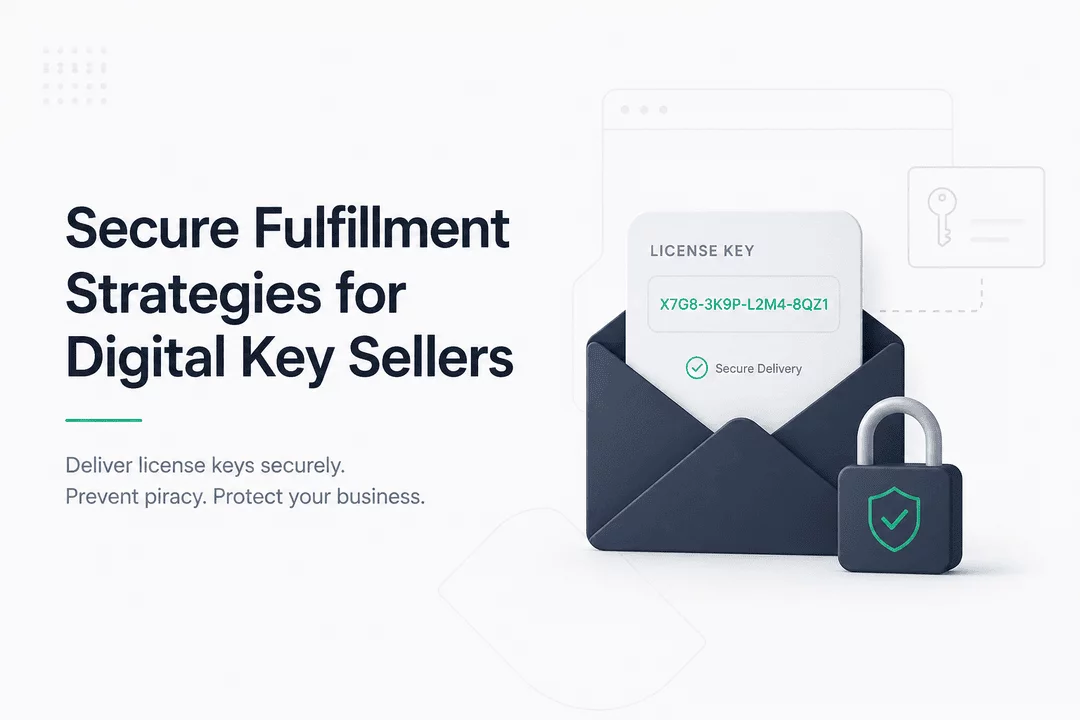
Secure Fulfillment Strategies for Digital Key Sellers
Selling digital keys sounds simple: customer pays → you send a key → done.
But in reality? It’s one of the most vulnerable business models online.
Keys get leaked. Links get shared. Fraudsters exploit weak systems. And before you realize it, you’re losing revenue without even knowing where it’s going.
If you’re selling on Shopify, the difference between a scalable business and a risky one comes down to one thing:
How secure your fulfillment system is.
Let’s break down how smart digital sellers protect their keys—and their profits.
The Hidden Problem Most Sellers Ignore
Here’s what many beginners don’t realize:
Digital keys are infinitely replicable.
Unlike physical products, there’s no shipping barrier. Once a key is exposed, it can spread across:
- Forums
- Telegram groups
- Resale marketplaces
And suddenly, one sale turns into dozens of unpaid users.
That’s why secure fulfillment isn’t a “nice-to-have”—it’s your first line of defense.
1. Stop Sending Keys Manually
If you’re still emailing keys manually, you’re setting yourself up for problems:
- Delays in delivery
- Human errors (wrong key, duplicate key)
- No tracking or control
Modern sellers automate everything.
With tools like Digitally, keys are delivered instantly after payment through secure systems—not exposed in plain text emails.
The shift is simple:
Manual → Automated
Risky → Controlled
Slow → Instant
2. Control Access, Not Just Delivery
Most sellers focus on sending the key.
Smart sellers focus on controlling access to it.
Instead of giving customers a raw key:
- Send a secure access link
- Require login or verification
- Limit how many times it can be viewed
This turns your delivery into a controlled environment, not just a one-time transaction.
3. Use Expiring Links (Your Secret Weapon)
Here’s one of the easiest upgrades you can make:
Expiring download links.
These allow you to:
- Set time limits (e.g., 24–48 hours)
- Restrict number of clicks/downloads
- Automatically disable access
So even if a customer shares the link, it won’t work forever.
This single feature can dramatically reduce:
- Unauthorized sharing
- Key leaks
- Abuse
4. One Customer = One Unique Key
This sounds obvious—but many sellers still reuse keys.
That’s a mistake.
A secure system ensures:
- Every customer gets a unique key
- Each key is marked as used after delivery
- You can trace every key back to a specific order
This gives you something powerful: accountability.
If a key leaks, you can identify exactly where it came from.
5. Add a Second Layer: Key Validation
Delivery security is step one.
Validation is step two.
If you’re selling:
- Software
- SaaS tools
- Premium access products
You should validate keys when they’re used.
That way, you can:
- Limit usage to one user/device
- Block reused or shared keys
- Revoke compromised access
Without validation, even securely delivered keys can still be abused later.
6. Protect Yourself from Fraud (Not Just Sharing)
Not all losses come from sharing—some come from fraudulent purchases.
Common scenario:
- A fraudster buys with a stolen card
- Receives the key instantly
- You later get a chargeback
Now you’ve lost:
- The product
- The money
To prevent this:
- Use Shopify’s built-in fraud analysis
- Delay fulfillment for high-risk orders
- Automate rules (instant vs manual delivery)
7. Track Everything (Seriously, Everything)
If you can’t see what’s happening, you can’t fix it.
A secure fulfillment setup should let you:
- Track which keys are delivered
- Monitor access/download activity
- Audit suspicious behavior
This turns your system from “blind selling” into a data-driven operation.
8. Don’t Expose Keys in Emails
This is a small mistake with big consequences.
Never send keys directly in:
- Email bodies
- Order confirmations
- Notifications
Why?
Because emails can be:
- Forwarded
- Hacked
- Intercepted
Instead, always send a secure access link.
9. Build for Scale from Day One
Here’s the truth:
What works for 10 sales will break at 1,000.
Manual workflows, unsecured links, and basic delivery methods don’t scale.
That’s why serious sellers use tools like Digitally to:
- Automate fulfillment
- Secure delivery
- Manage large key inventories
- Reduce fraud and leakage
Scaling isn’t just about getting more customers—it’s about handling them securely.
Final Thoughts
Selling digital keys is one of the fastest ways to build an online business.
But it’s also one of the easiest to exploit—if you’re not careful.
The sellers who win long-term aren’t just focused on sales.
They focus on:
- Control
- Security
- Systems
Because in digital products, how you deliver matters just as much as what you sell.
Frequently Asked Questions
Using automated tools that provide secure access links, expiration controls, and unique key delivery
They prevent long-term sharing and limit unauthorized access to your digital products.
Yes, with proper systems you can track which key was delivered to which customer.
Use unique keys, validation systems, and restricted access links.
For scaling businesses, yes—it’s slow, error-prone, and less secure.
Digitally automates secure delivery, manages key inventory, and protects your digital products from leaks and fraud.
secure digital key delivery
Digitally
prevent digital product piracy
license key delivery system
automate digital downloads Shopify
ecure SaaS key distribution
Sell digital product

Digitally ‑ Digital Products
Sell files, e-books, license keys, promo codes & digital links
 Install Now