How to Evaluate Shopify for Selling Digital Products (Beginner’s Guide)
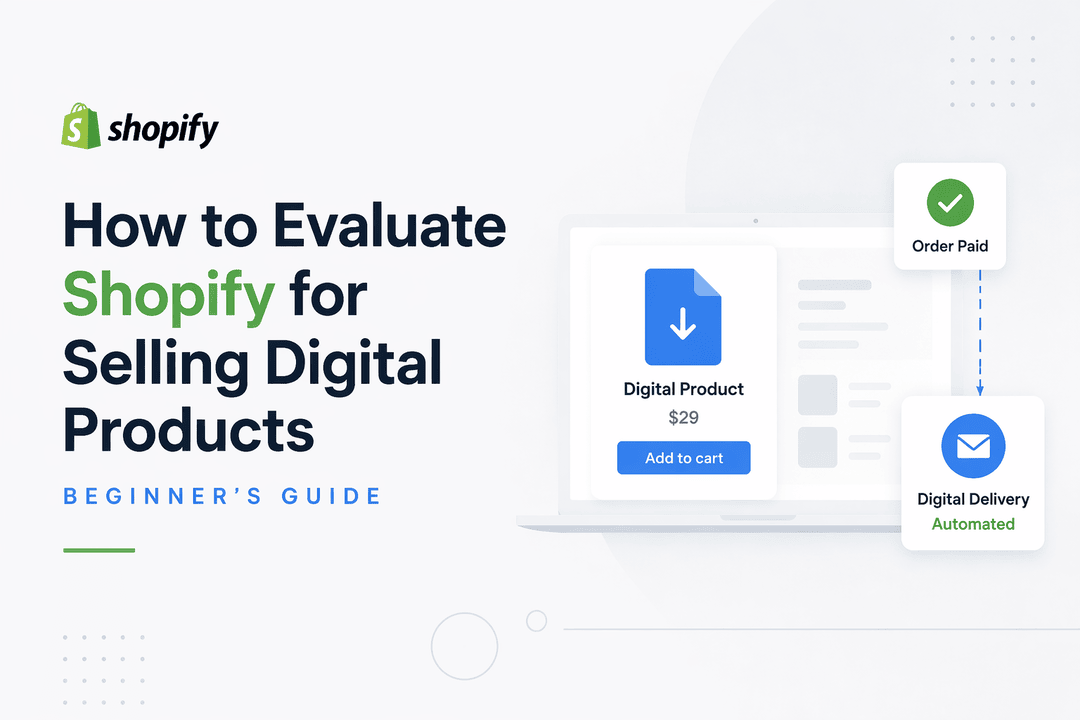
Selling digital products has become one of the easiest ways to start an online business. With no inventory, no shipping, and the ability to automate delivery, it’s a model that works for beginners and experienced entrepreneurs alike.
But choosing the right platform is where most people get stuck.
If you’re considering Shopify, this guide will help you evaluate whether it’s the right choice for selling your digital products—before you invest time and money.
What Does It Mean to Sell Digital Products?
Digital products are goods that customers can download or access online instead of receiving physically.
Common examples include:
- eBooks and guides
- Online courses
- Software and license keys
- Templates (design, Notion, resumes, etc.)
- Music, videos, and creative assets
The biggest advantage?
Once created, these products can be sold repeatedly without additional production costs.
Why Shopify Is Popular for Digital Products
Although Shopify was originally designed for physical products, it has evolved into a flexible platform that supports digital businesses as well.
What makes Shopify attractive:
- Simple store setup
- Professional storefront themes
- Secure payment processing
- Ability to scale as you grow
However, evaluating Shopify properly means looking beyond the surface.
1. Ease of Use for Beginners
One of Shopify’s strongest advantages is its beginner-friendly interface.
You don’t need coding skills to:
- Create your store
- Upload products
- Customize your design
The dashboard is clean and intuitive, allowing you to focus on selling instead of figuring out technical details.
What to consider:
If you’re new to eCommerce, Shopify removes most of the technical barriers.
Verdict: Excellent choice for beginners.
2. Digital Product Delivery (The Most Important Factor)
This is where many beginners misunderstand Shopify.
By default, Shopify doesn’t fully handle digital product delivery on its own. You’ll need a dedicated app—like your app, Digitally—to unlock its full potential.
With the right setup, you can:
- Automatically deliver files after purchase
- Send secure download links
- Deliver license keys instantly
- Control download limits
What to consider:
Your success with Shopify depends heavily on how well your delivery system works.
Verdict: Powerful, but requires the right tools.
3. Payment Options and Global Reach
Shopify makes it easy to accept payments from customers worldwide.
Supported options include:
- Shopify Payments
- Stripe
- PayPal
This flexibility allows you to sell digital products globally without complex setup.
What to consider:
Make sure your target audience can use your available payment methods.
Verdict: Strong global selling capabilities.
4. Scalability for Long-Term Growth
Many beginners start small—but your platform should support growth.
Shopify allows you to:
- Add unlimited products
- Handle large traffic volumes
- Integrate marketing tools
- Expand into subscriptions or bundles
You won’t need to switch platforms as your business grows.
What to consider:
Think long-term. Switching platforms later can be costly and time-consuming.
Verdict: Built for growth.
5. App Ecosystem (Where Shopify Becomes Powerful)
Shopify’s app ecosystem is what transforms it into a complete digital selling platform.
With apps, you can:
- Automate product delivery
- Manage license keys
- Add subscriptions
- Improve email marketing
- Enhance customer experience
Your app, Digitally, fits directly into this ecosystem by solving the biggest challenge—automated delivery.
What to consider:
Choose apps that simplify your workflow instead of complicating it.
Verdict: A major advantage over simpler platforms.
6. Pricing and Cost Considerations
Shopify is not free, so it’s important to evaluate the costs carefully.
Typical expenses include:
- Monthly subscription
- App fees
- Payment processing fees
While this may seem high at first, the value comes from automation, scalability, and reliability.
What to consider:
Can your pricing strategy cover these costs while remaining profitable?
Verdict: Worth it for serious sellers.
7. Security and Product Protection
Digital products are vulnerable to piracy, so security matters.
Shopify provides:
- SSL-secured checkout
- Reliable hosting
- Safe payment processing
With apps, you can also:
- Limit downloads
- Use expiring links
- Protect license keys
What to consider:
Protecting your digital assets should be a priority from day one.
Verdict: Strong security with proper setup.
Pros and Cons of Using Shopify for Digital Products
Pros
- Easy to use for beginners
- Highly scalable
- Professional storefront design
- Strong payment integrations
- Powerful app ecosystem
Cons
- Requires apps for full digital functionality
- Monthly and app costs can add up
- Not built specifically for digital products out of the box
Final Thoughts: Should You Use Shopify?
Shopify is a powerful platform—but it’s not a plug-and-play solution for digital products unless you configure it correctly.
If you combine Shopify with a reliable digital delivery solution like Digitally, you get:
- Fully automated delivery
- Secure file distribution
- A scalable business model
For beginners who want to build a long-term digital product business, Shopify is one of the best choices available.
Frequently Asked Questions
Technically yes, but it’s not practical. You’ll need an app for automation and secure delivery.
No, digital products don’t require physical inventory.
Using a dedicated app like Digitally ensures fast, secure, and automated delivery.
Yes, Shopify is one of the easiest platforms to use for new sellers.
There are no hidden costs, but subscriptions and apps should be factored into your budget.
Absolutely. Shopify is designed to grow with your business.
evaluate Shopify for digital products
Digitally
sell digital products Shopify
Shopify for beginners digital products
automate digital product delivery Shopify
Shopify digital delivery apps

Digitally ‑ Digital Products
Sell files, e-books, license keys, promo codes & digital links
 Install Now