How to Build Passive Income by Selling Digital Products
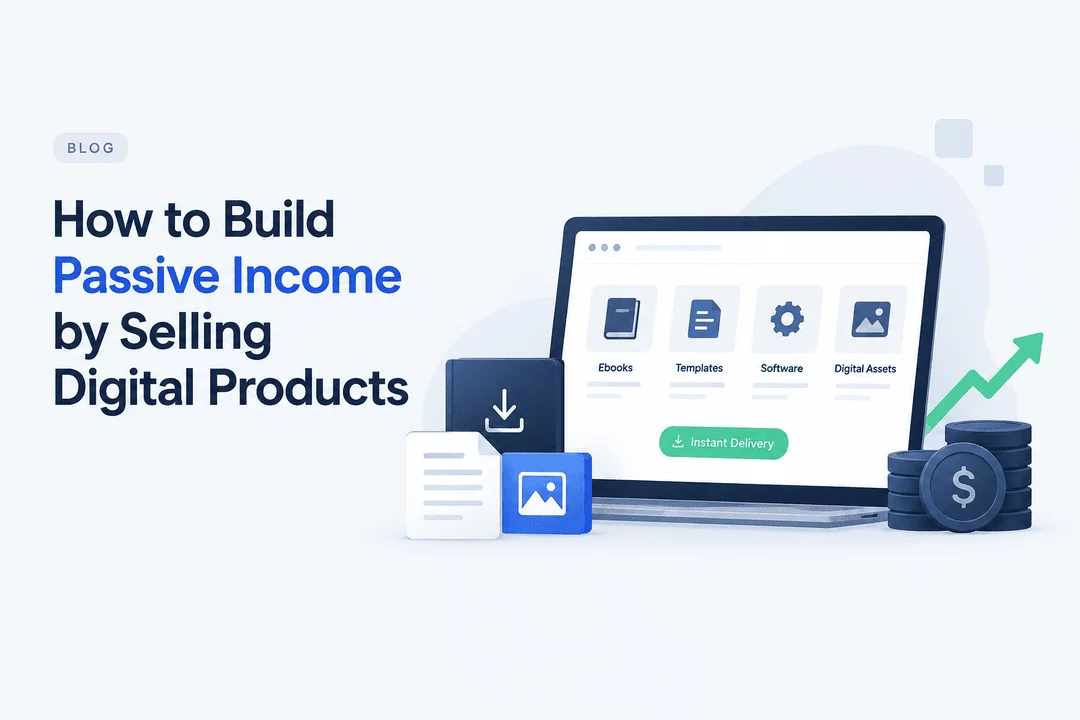
Imagine creating a digital product once and selling it to customers around the world without packing boxes, managing physical inventory, or shipping orders manually. That is one of the biggest advantages of selling digital products online.
Digital products can include ebooks, templates, online resources, software, design assets, printable planners, and license keys. Once you create a useful product and establish a reliable sales process, you can continue generating sales without personally fulfilling every order.
However, passive income is not entirely hands-off. You still need to create valuable products, attract customers, maintain your store, and provide customer support. The goal is to build a business where technology automates repetitive tasks and allows your products to sell more efficiently.
In this guide, you will learn how to build passive income by selling digital products, which products to consider, how to price and market them, and how Digitally – Digital Products can help automate digital delivery on Shopify.
What Is Passive Income from Digital Products?
Passive income from digital products is revenue generated by selling downloadable or digitally delivered products through an online store. Unlike many physical products, digital products can often be delivered repeatedly without manufacturing a new item for every order.
For example, you could create an ebook about personal budgeting and sell it to hundreds of customers. Each customer receives the same digital resource, while your main ongoing expenses may include marketing, platform fees, software subscriptions, and customer support.
Digital products are attractive because they can offer:
- Low inventory costs: No physical stockroom or warehouse is required.
- Scalable delivery: A digital file can be delivered to many customers.
- Flexible working arrangements: You can manage your store from almost anywhere.
- Multiple revenue opportunities: You can offer bundles, premium versions, subscriptions, or complementary products.
- Automated fulfillment: Digital delivery tools can reduce repetitive manual work.
These advantages do not guarantee profits, but they can make digital products an appealing business model for creators, educators, freelancers, and entrepreneurs.
1. Choose a Profitable Digital Product Niche
The first step is selecting a niche where you understand your audience and can solve a specific problem. Rather than creating something simply because it is easy to make, focus on what customers actually need.
Here are some digital product ideas worth exploring.
Ebooks and Digital Guides
Create educational resources that help customers learn a skill or accomplish a task. Examples include beginner guides, business workbooks, study materials, recipes, and industry-specific handbooks.
Ebooks can be particularly suitable for creators who enjoy writing or already have useful knowledge to share.
Templates and Printable Products
Templates help customers save time by providing a ready-made starting point. Potential products include:
- Social media content calendars
- Business proposal templates
- Budget planners and trackers
- Resume and portfolio templates
- Printable activity books and worksheets
- Notion and spreadsheet templates
You can also create product bundles for customers who want a complete solution rather than purchasing individual files.
Software, Plugins, and Digital Tools
Software products can solve recurring problems for specific audiences. Examples include design presets, plugins, scripts, productivity tools, and downloadable applications.
Depending on the product, you may sell installation files, access links, license keys, activation codes, or update entitlements. Secure delivery and clear licensing terms become especially important for these products.
Online Courses and Educational Resources
If you have expertise in a subject, you can sell video lessons, study notes, worksheets, downloadable presentations, or supplementary learning materials.
A focused course that solves one clear problem may be easier to market than a broad course covering too many unrelated topics.
Digital Art, Audio, and Creative Assets
Designers and creators can sell icons, fonts, illustrations, stock audio, sound effects, presets, textures, and other downloadable resources.
The key is to understand the intended buyer, explain how the assets can be used, and provide clear licensing information.
License Keys and Activation Codes
Software developers and digital businesses can sell activation codes, product keys, subscription keys, and other digital credentials.
These products can support one-time purchases or recurring business models, depending on the license structure. Automated fulfillment can help customers receive their codes quickly after completing a purchase.
2. Validate Your Idea Before Creating the Product
A common mistake is spending weeks building a product before checking whether anyone wants it.
Before investing significant time, validate your idea with a few simple steps.
- Identify your target customer. Define who needs the product and what problem they want to solve.
- Research competing products. Review product descriptions, customer feedback, pricing, and gaps in existing solutions.
- Study search demand. Explore relevant search terms and questions customers ask online.
- Talk to potential buyers. Ask about their challenges and what they would pay to solve them.
- Launch a small version. Test a simple product or starter bundle before creating a large catalog.
For example, instead of immediately developing 100 social media templates, start with a focused pack for a specific industry. Customer feedback can help you decide which features to add next.
Validation reduces guesswork and helps you invest your time in products with a clearer commercial purpose.
3. Create a High-Quality Digital Product
Your product should deliver the result promised on its sales page. Customers are more likely to recommend a product when it is useful, easy to understand, and professionally presented.
Use this process to prepare your first product:
- Outline the problem the product will solve.
- Organize the content into logical sections.
- Create the files using appropriate tools.
- Check formatting, links, spelling, and usability.
- Test the product on different devices where relevant.
- Prepare a clear product description and preview images.
- Explain file formats, compatibility, usage rights, and any limitations.
For instance, if you sell a budgeting spreadsheet, include instructions, sample data, and a simple explanation of how buyers can customize it.
If you sell software, provide installation instructions and explain the supported operating systems, license terms, and activation process.
You do not need dozens of products to begin. One well-designed product that solves a specific problem can be a useful foundation for your business.
4. Set Up a Shopify Store for Digital Products
Shopify gives you a platform to build a branded storefront, publish product pages, accept orders through supported payment methods, and manage your business.
To get started:
- Create your Shopify store.
- Choose a theme that makes your products easy to browse.
- Add your digital products and descriptions.
- Upload previews, screenshots, or sample pages.
- Configure pricing, payment methods, and applicable taxes.
- Set up digital delivery.
- Place test orders and verify the complete customer experience.
Your product page should answer important questions before a customer purchases. Explain exactly what is included, how the product is delivered, whether updates are included, and what the buyer can do with it.
Digital products may also require additional configuration for taxes, privacy, licensing, and consumer protection depending on your location and the markets you serve.
Why Automate Digital Delivery?
Manually emailing files or activation codes after every order can become time-consuming as your business grows. It may also introduce mistakes, delayed deliveries, and unnecessary support requests.
An automated delivery system can connect purchases with the appropriate digital files, download links, or license credentials. This allows customers to receive their purchases with less manual intervention.
Digitally – Digital Products helps Shopify merchants manage digital delivery from their stores. Depending on your needs and plan, you can use features such as file delivery, custom download links, license key and activation code delivery, download limits, expiring links, and PDF stamping.
Instead of manually handling every delivery, you can build a more consistent fulfillment process and spend more time improving your products and marketing.
5. Automate Your Digital Product Delivery with Digitally
For a digital product business to scale, customers need a reliable way to access what they purchased.
Digitally is a Shopify app designed to help merchants deliver digital products and manage related fulfillment tasks.
Here are some ways it can support your business.
Automatic File Delivery
Deliver digital files to customers after purchase, reducing the need to send every file manually.
This can be useful for ebooks, templates, guides, downloadable resources, and other file-based products.
License Key and Activation Code Delivery
If you sell software, plugins, subscriptions, or other licensed products, you can use digital key delivery to distribute the appropriate credentials to customers.
Bulk license key import and export can help you manage larger key inventories. Availability tracking is offered on eligible Plus and Unlimited plans.
Custom Download Links
Some digital products are better delivered through an external resource or personalized link. Digitally supports custom-link delivery for products that require this approach.
For example, a customer might need access to a digital resource library or a specific online service after checkout.
Download Limits and Expiring Links
Not every digital product should have unlimited or permanent download access. Depending on your configuration, download limits and expiring links can help you manage access to downloadable files.
These controls can support your broader content protection strategy, although no delivery method can eliminate all unauthorized sharing.
PDF Stamping
For eligible PDF products, PDF stamping can help associate a delivered document with order or customer information, depending on the available settings.
This can discourage casual redistribution and help creators manage their digital content more responsibly.
A More Consistent Customer Experience
Automated delivery can reduce delays between payment and fulfillment. Clear delivery instructions and suitable email templates also help customers understand how to access their purchases.
6. Price Your Digital Products Strategically
Pricing influences both your conversion rate and your profit margin. A very low price is not always the best strategy, and a high price needs to be supported by clear value.
Consider these common pricing models.
One-Time Pricing
Customers pay once to access a product. This model works well for ebooks, templates, printable resources, and many downloadable files.
Product Bundles
Combine related products into a package at a price that offers a clear advantage over purchasing everything separately.
For example, a creator could sell a single planner for $9 and a bundle of five related planners for $29.
Tiered Pricing
Offer different versions of a product to serve customers with different needs.
A template product might include a basic version, a professional bundle, and a premium package with additional resources.
Subscription Pricing
Recurring pricing can work for products that provide ongoing value, such as regularly updated resources, membership content, or software access.
Subscriptions also create ongoing obligations: customers expect the promised updates, service availability, or access for as long as their subscription remains active.
Calculate Your Profit
Do not confuse sales revenue with profit. Consider platform fees, app subscriptions, payment processing, advertising, refunds, support, and the time required to maintain your products.
For example, if you sell a digital template for $20 and incur $5 in combined variable costs per sale, your contribution before fixed costs and taxes is $15.
The actual amount you keep will depend on your complete cost structure and applicable taxes.
7. Build a Marketing System That Brings Customers to Your Store
Even an excellent product needs visibility. A sustainable digital product business combines several marketing methods instead of relying on a single traffic source.
Search Engine Optimization (SEO)
Create useful content around the problems your product solves. A seller of budget planners, for example, could publish articles about budgeting methods, savings goals, and expense tracking.
Optimize your product pages with clear titles, descriptive copy, relevant search terms, and helpful images. Answer real customer questions rather than repeating keywords unnaturally.
Social Media Content
Demonstrate your product in action through tutorials, short videos, examples, and before-and-after comparisons.
A template seller could show how a customer organizes a week's work using the template. A software creator could demonstrate how an activation process works.
Focus on showing the product's value rather than only asking people to buy it.
Email Marketing
With appropriate customer consent, email marketing can help you nurture interested visitors and keep existing customers informed.
You can send educational content, product announcements, relevant recommendations, and updates. Make sure your marketing practices comply with applicable privacy and email regulations.
Affiliate and Creator Partnerships
Relevant creators can introduce your products to audiences that already trust their recommendations.
Use clear partnership terms and track sales or referrals so you can understand which collaborations are worthwhile.
Customer Reviews and Testimonials
Genuine customer feedback helps new buyers evaluate your product. Ask customers for honest reviews after they have had a reasonable opportunity to use it.
Never fabricate testimonials or offer incentives in ways that violate platform policies or applicable laws.
8. Increase Revenue from Existing Customers
Passive income does not have to come exclusively from finding new buyers. Existing customers may be interested in related products that solve their next problem.
Consider these approaches:
- Upsells: Offer a more complete version of a product.
- Cross-sells: Recommend related resources that complement the original purchase.
- Bundles: Combine several useful products into one package.
- Product updates: Improve existing products and communicate meaningful additions.
- Recurring access: Offer subscriptions when ongoing value justifies recurring payments.
- Customer education: Help buyers get better results from what they purchased.
For example, a customer who purchases a beginner design template might later want a complete social media content bundle.
Keep recommendations relevant and avoid overwhelming customers with unnecessary offers. A strong customer relationship is more valuable than a single aggressive upsell.
9. Protect Your Digital Products and Reduce Support Work
Digital products are convenient to distribute, but unauthorized sharing and customer access problems can affect your business.
Consider a combination of practical safeguards:
- Use clear license terms and usage policies.
- Apply download limits or expiring links when appropriate.
- Use PDF stamping for supported documents where it makes sense.
- Keep software license records organized.
- Provide clear download and installation instructions.
- Test delivery emails and download links regularly.
- Maintain backups of your original files.
- Make your refund, replacement, and support policies easy to find.
Security is not a single feature. It is a combination of appropriate delivery settings, product design, licensing, monitoring, and customer communication.
Digitally can help Shopify merchants manage several of these delivery tasks in one place, reducing the need to handle routine fulfillment manually.
10. Track the Metrics That Matter
To grow a digital product business, monitor performance and make improvements based on actual customer behavior.
Important metrics include:
Conversion rate: The percentage of store visitors who make a purchase.
Average order value: The average amount customers spend per order.
Customer acquisition cost: The average amount spent to acquire a customer.
Contribution per sale: Revenue remaining after variable costs.
Refund rate: The percentage of orders that are refunded.
Repeat purchase rate: The percentage of customers who purchase again.
Delivery-related support requests: The number of customer questions about missing files, download problems, or activation issues.
If your store receives substantial traffic but few orders, improve your product page, offer clarity, pricing, or checkout experience. If customers frequently ask how to access their purchases, review your delivery workflow and instructions.
Small, consistent improvements can make the business more efficient over time.
11. Common Mistakes to Avoid When Building Passive Income
Avoid these mistakes when starting your digital product business.
Creating products without validating demand. Research customer needs before investing too much time.
Expecting immediate passive income. A new store often needs sustained marketing and experimentation before sales become consistent.
Ignoring product quality. Poor instructions, broken files, and unclear usage rights can damage customer trust.
Relying on one traffic source. Diversify your marketing where practical so a change in one platform does not disrupt your entire business.
Underpricing without understanding costs. Account for fees, support, marketing, updates, and other expenses.
Delivering products manually for too long. Repetitive fulfillment can consume time that could be spent on growth.
Ignoring customer support. Fast, helpful support can prevent refunds and improve the buying experience.
Overpromising security or earnings. No digital delivery system guarantees that a file will never be shared, and no product guarantees passive income.
The strongest approach is to build a useful product, establish a dependable sales process, and improve the business as you learn from customers.
Conclusion
Building passive income by selling digital products starts with solving a real problem for a specific audience. Choose a product that fits your skills, validate demand, create a high-quality offer, and establish a storefront that makes buying and accessing the product simple.
Next, build a repeatable marketing process, price your products carefully, and use automation to reduce repetitive work. As your store grows, improve your offers using customer feedback and business metrics.
For Shopify merchants, Digitally – Digital Products can help simplify digital file delivery, custom-link fulfillment, license key distribution, and other digital product workflows. By reducing manual fulfillment, you can focus more of your time on creating valuable products and growing your store.
Start with one useful product, make the buying experience reliable, and build from there.
Frequently Asked Questions
Yes, selling digital products can create a source of recurring or ongoing income when you offer products customers want and build an effective sales process. However, income is not guaranteed, and marketing, maintenance, and customer support still require effort.
Popular options include ebooks, printable planners, templates, online courses, software, design assets, and license keys. The best choice depends on your expertise, customer demand, competition, and ability to deliver ongoing value.
Yes. Shopify allows merchants to sell digital products through an online storefront. You can use a digital delivery app such as Digitally – Digital Products to help deliver downloadable files, custom links, and license keys to customers.
Digitally helps Shopify merchants manage digital product fulfillment through features such as file delivery, custom download links, license key delivery, download limits, expiring links, and PDF stamping. These capabilities can reduce repetitive manual work after a customer places an order.
No advanced technical skills are required for many digital products. You can start with a simple ebook, printable, or template using accessible creation tools and a Shopify store. More complex products, such as software, may require specialized technical knowledge.
You can configure a digital delivery app to provide customers with access to their purchased files, links, or license credentials. With Digitally, Shopify merchants can set up supported delivery workflows to make fulfillment more consistent and reduce the need to send products manually.
Passive Income
Digital Products
Digital Downloads
Make Money Online
Automated Delivery
Digitally

Digitally ‑ Digital Products
Sell files, e-books, license keys, promo codes & digital links
 Install Now